Microaddictions
Epistemic status: very speculative
Scott proposes the concept of 'microaddictions', comparing eating habits and other enjoyable activities to drug addiction patterns, challenging traditional views on addiction.
Everyone always says you should “eat mindfully”. I tried this once and it was weird. For example, I noticed that only the first few bites of a tasty food actually tasted good. After that I habituated and lost it. Not only that, but there was a brief period when I finished eating the food which was below hedonic baseline.
This seems pretty analogous to addiction, tolerance, and withdrawal. If you use eg heroin, I’m told it feels very good the first few times. After that it gets gradually less euphoric, until eventually you need it to feel okay at all. If you quit, you feel much worse than normal (withdrawal) for a while until you even out. I claim I went through this whole process in the space of a twenty minute dinner.
I notice this most strongly with potato chips. Presumably this is pretty common, given their branding:
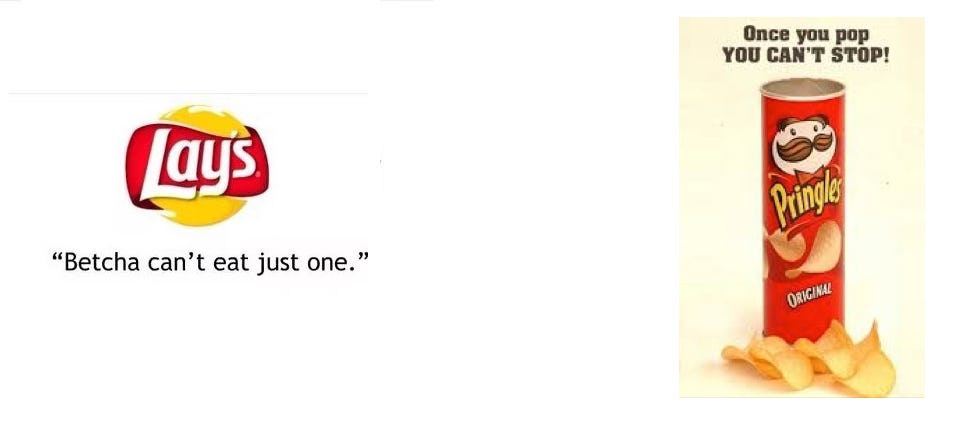
It’s actually pretty hard to eat a single potato chip and then stop when there’s a whole bag in front of you. But also, the 20th potato chip tastes much less good than the first. My experience (maybe not universal!) is that the same dynamic applies, somewhat less strongly but still above a threshold of noticeability, to any tasty food.
Should I add “…and any other enjoyable activity”? The first minute of watching a movie certainly isn’t the best; they need time to introduce the characters, start the plot, etc. But if you interrupt me in the middle of an exciting movie, I’ll get pretty angry (even if I know I can pause it on DVR and finish it later). Is this withdrawal from a movie addiction? When movies don’t end immediately after the climax, but instead have a leisurely denouement telling us where all the characters end up, is that a movie taper, in the same sense that you might taper from 3 mg Xanax to 2 to 1 and so on when trying to overcome a Xanax addiction?
Normally I would describe the feeling of being engrossed in a movie as a “flow state”. Are flow states just another word for microaddictions? As a child, I would throw a temper tantrum if my parents walked in and paused the TV right at the climax of an amazing show (I haven’t mellowed out with age - I just own doors with locks on them now). Is this “interrupting a flow state”? Is it the same as what happens when you give opioid addicts a sudden injection of naloxone? (not fun!)
This is part of why I’m skeptical of a purely chemical definition of addiction, where addiction is what happens when some chemical that mimics a neurotransmitter “hijacks your reward center”, and so nonchemical addictions (eg video games, Internet) are by definition impossible and/or metaphorical. Yes, sometimes chemicals mimic neurotransmitters and hijack your reward center. But all that does is stimulate your reward center, the same way video games and potato chips stimulate it. Opioids can still stimulate your reward system more strongly than video games and potato chips can, but not for lack of trying by Activision and Frito-Lay Inc.
Instead, I think of addiction as what happens when you become hyper-aware of one particular facet of your normal motivation system. Usually your motivational system is doing lots of things at once, and they’re all in some kind of useful balance, and you think of that balance as “what I want”. If one facet becomes much stronger than everything else, it feels weird - “not what I want” - and one of the categories we have for that is addiction. The easiest way to get that kind of disproportion is a chemical that mimics a neurotransmitter. But other ways are rapidly catching up.
