I do not understand “rape culture”
Scott Alexander critiques the concept of 'rape culture', arguing that society actually treats rape more seriously than many other crimes, contrary to what the term implies.
Trigger warning: discussion of rape
Someone brought up “rape culture” in the comments to my last post.
Now I really should stop criticizing feminist ideas, because doing so is both mind-numbing and mind-killing and makes me feel like a bad person. It apparently gets me emotional enough to start making bad arguments, one of which I decided to retract in the last post (see edit history at the bottom). And after this I promise not to write another post about it for a couple of months. But I just wanted to express how confused and skeptical I am of the term “rape culture”.
I mean, there’s one way it sort of makes sense, and that is in naming a certain small and circumscribed cluster of people. I’ve heard the phrase NASCAR culture to refer to people who dress up in NASCAR clothing and go to races and obsess over the sport. Total annual NASCAR race attendance is about 1% of the United States, so calling 1% of the US “involved in NASCAR culture” seems fair enough, though it also seems more philosophically perilous than just saying “1% of people like NASCAR”.
Compare the term “car culture”, as in the phrase “America is a car culture”. It means that most Americans like cars a lot, and even those Americans who don’t like cars have absorbed pro-car memes and gladly accept propositions like that everyone should have to pay taxes to help maintain the highway system. And that it’s really hard to, say, bike to work everyday, and most people have agreed to be okay with that as a society because we implicitly accept that cars are a part of the natural order. Here the claim isn’t that 1%, or 10%, or whatever, of America is a car culture. It’s that American society itself is a car culture in some fundamental way.
If someone wants to point out some rapists or rape apologists and claim they are rape culture in the same way NASCAR fans are NASCAR culture – well, this is still asking for the term to be abused. But when people try to pull the second meaning – America “is” a rape culture – this is the part that has me throwing up my hands and wondering what the heck they are thinking.
As I understand it, here are the claims involve in “rape culture”.
1. Society treats rape as less horrendous and more excusable than other crimes
2. The criminal justice system is unusually loaded in favor of rape suspects and against victims
3. People are more willing to blame rape victims than victims of other crimes
4. Misogyny in society causes sexual objectification of women, which latently condones/promotes rape
5. The general tolerance of rape is a sign that society is biased against women and doesn’t care about their problems
Every single one of these claims seems to me diametrically wrong.
Claim 1: Society treats rape as less horrendous and more excusable than other crimes
I’ve never seen Dexter, but I hear it’s about a serial killer who goes around murdering people but is otherwise a pretty neat guy.
I’ve never played Grand Theft Auto, but I hear it’s about a thief who goes around stealing people’s cars and stuff but is otherwise pretty likeable.
I’ve never seen Silence of the Lambs (I HAVE NO EXPOSURE TO POPULAR CULTURE, SORRY), but I hear it’s about a really urbane and sophisticated cannibal who eats people’s brains and who became one of film’s most popular and respected characters.
Sweeney Todd (finally, something I’ve seen!) combines theft, cannibalism, and bloody mass murder into a huge extravaganza of crime, and people happily show it to their teenage kids as a fun family movie (as well they should, because it is great)
So having likeable and sympathetic murderers, thieves, and cannibals is totally a-okay. You can even get away with likeable and sympathetic Nazis – think Franz from The Producers. Now, tell me, can you imagine a popular mass-market TV show whose hero was a serial rapist? How about a computer game in which the object was to rape as many people as possible?
Let me take a different tack. I have a file on my computer where I collect jokes that I like. I’m pretty hard to offend, so the jokes aren’t really sorted by offensiveness in any way. Looking through it, I see two jokes about cancer, one about AIDS, one about bestiality, three about murder, one about natural disasters, one about terrorism, one about cannibalism…and zero about rape.
I have no doubt that rape jokes exist, but you probably need to be listening to a particular sort of shock jock for them. As opposed to jokes about murder, jokes about cannibalism, jokes about terrorism, et cetera, which are so utterly neutral you can find them in children’s books if you want. Even Holocaust jokes are more common and more widely accepted than rape jokes.
My point here is that far from being unusually blase about rape, society treats rape as a special kind of evil, worse than murder, worse than cannibalism, worse even than the Holocaust, something that is never sympathetic and never funny. Further, it is practically alone in being treated this way.
I’m not complaining about this. Because there are so many rape survivors likely to be traumatized at discussion of rape, this is probably a good thing. But ignoring this reality and claiming we are in fact more willing to excuse lighthearted discussion of rape than other crimes is just false.
Claim 2: The criminal justice system is unusually loaded in favor of rape suspects and against victims
Conviction rates for rape are similar to or higher than those for other forms of violent crime. In Britain, About fifty seven percent of rape trials end in convictions, compared to fifty six percent of trials for other violent crimes.
The claim that the criminal justice system is loaded against rape survivors mostly comes from the difficulty of getting cases to trial in the first place. But there are more charitable explanations for this.
Most rapes are crimes without witnesses. If the accused claims the sex was consensual then even DNA cannot provide corroborating evidence against this story. The courts are presented with a “he said” / “she said” dilemma. Because the legal system enshrines the concept of “innocent until proven guilty” – that is, erring in favor of the defendant when a guilt cannot be established “beyond a reasonable doubt” – this situation usually results in acquittal.
Therefore the police have two options in a case where someone comes to them to report a rape but has no corroborating evidence.
The police can tell the survivor there is not enough evidence to press charges, thus saving them the trouble of a long and psychologically traumatizing trial which will inevitably end in an acquittal. If they go this route, then people accuse them of rape culture because of their “culture of skepticism” where they doubt all rape allegations.
Or the police can bring the case to trial, in which the jury is asked to distinguish between the prosecution’s claim that an assault was rape, versus the defense’s claim that it was consensual. If there’s no good way to establish what actually happened, the trial will usually devolve into character assassination – that is, the prosecution will try to prove the accused is the kind of person who would rape and then lie about it, and the defense will try to prove that the survivor is the kind of person who would consent to sex and then lie about it. If they go this route, then people accuse them of rape culture because of their “slut shaming” in which it is acceptable to character assassinate a rape survivor.
But I have yet to hear a good proposal about how to avoid these problems without dropping the suspect’s right to be “innocent until proven guilty” and have his “guilt proven beyond a reasonable doubt”. If you keep those in place, then somebody somewhere along the line has to be responsible for doubting the survivor’s story, and in many cases, even in the overwhelming percent of cases where rape really occurred, the evidence at hand just won’t provide any beyond-a-reasonable way to dispel those doubts.
The failure to remove “innocent until proven guilty” is not a sign of a special and unusual “rape culture” in which rape trials have a higher burden of proof. Indeed, rape shield laws make rape trials a special case where the victim has more rights, and the accused fewer, than in other sorts of crime. These are followed vigorously, sometimes off a cliff. Other than that, it’s just insisting on the same standards as every other sort of trial.
Some might claim that rape is a special case where burden of proof is unnecessary. But anti-death penalty groups have found that in fact many people are falsely convicted – and even executed for rape. The Innocence Project estimates that between 8-15% of rape convictions are false, and many of the people found to be falsely convicted were going to remain in prison for the rest of their lives (and needless to say a disproportionate number of them were minorities). The Project notes this is somewhat higher than for other crimes like murder. These numbers correspond pretty well with the generally accepted statistic that about ten percent of rape accusations are false (uh, assuming our criminal justice system has an accuracy of about equal to chance. We should probably do something about that.)
So although rape cases are incredibly heart-breaking and there are no good options, the criminal justice system seems caught between a rock and a hard place. I see no evidence for rape culture here either.
3. People are more willing to blame rape survivors than victims of other crimes
When I lived in Ireland, my friend got his bike stolen. He was immediately subjected to a barrage of questions like “Did you lock it right?”, “Are you sure you locked it right?” “Was it in a really visible spot?” “Don’t you know that brand of bike lock is easy to cut through?” and “Why did you even keep biking when you knew there was so much bike theft in this area?”.
This seems to be my experience with most types of crime. If you get mugged in a dark alley late at night, people will tell you “Well, duh, it’s your own fault for walking alone in a dark alley late at night with lots of money on you.” If you get carjacked, people will tell you the brand of car alarm you should have bought.
And goodness forbid you get scammed. People will either tell you it’s because of your own greed (“You can’t scam an honest person”), tell you all sorts of stupid signs to look for (“Did the guy have a scammy aura about him?”), or refer you to the Better Business Bureau and a bunch of other websites that no sane person possibly checks before every single time they do business with an honest-looking person.
Cracked even thinks this is an appropriate topic for a comedy article – here’s Four Types Of Victims We Have To Stop Feeling Sorry For. People who get mauled by animals are number three – why were they hanging out near animals, anyway?
In fact, it seems that in every case where someone has just had something bad happen to them, it’s a tradition to tell them ways they could have prevented it.
I do not want to justify the “advice” people give rape survivors. Some of it seems broadly good (if you’re meeting a strange man for a date or something, do it in a public place), but much of the rest seems well-intentioned but actively wrong (it’s been pretty well established that the clothes you are wearing do not affect sexual assault rate). Whether the advice is good or not, giving it to someone who has just been traumatized is without a doubt a stupid decision, and giving it in place of punishing an actual perpetrator is an obvious miscarriage of justice.
But as far as I know, this stupid decision is only ever criticized in the case of rape. The difference between rape and other forms of tragedy is not that rape is the only tragedy in which people try to advise survivors how they could have avoided it, but that rape is the only tragedy where a person giving such well-intentioned but stupid advice gets their name plastered over the national news and has a Slut Walk organized against them.
If rape culture means people being unusually tolerant of or unsympathetic to rape, I cannot find a sign of rape culture here either.
4. Misogyny in society causes sexual objectification of women, which latently condones/promotes rape
Split this one into two categories. Why is there so much sexual objectification of women? And does sexual objectification of women implicitly condone rape?
The reason there is so much sexual objectification of women seems really really obvious. People really like sex. That’s all. There is no need for any more conspiratorial or uncharitable explanation.
If you look at gay men, they sexually objectify men all the time. If you look at products aimed at women, whether it be women’s magazines, perfume, whatever, once again, they’re plastered with images of sexy men.
Heterosexual men have more social power and money than gays or women. They also are perceived, rightly or wrongly, as being especially obsessed with sex. That means if you want to sell thing to people with lots of money – the best type of people to sell things to – using pictures of sexy women is pretty much your best bet. There is no further conspiracy theory required for why people present images of sexy women in society. The idea that it has anything to do with secretly being okay with rape is somewhere around Roswell-level plausibility.
Nor does the sexual objectification of women necessarily imply that rape is okay. Let’s take actual objects. Our society is obsessed with consumer goods. It demands loudly and viciously that people try to get as many consumer goods as possible at every opportunity it gets. But no one implies that our society is secretly condoning theft.
Saying “Desire consumer goods!” is a very different message from “Be willing to break the law, hurt others, and commit morally repulsive actions in order to obtain consumer goods!” Likewise, putting up pictures of sexy women does not have to be part of a rape culture where people imply that raping those same sexy women is okay.
5. The general tolerance of rape is a sign that society is biased against women and doesn’t care about their problems
Society is obsessed with gender and gender-related issues which is exactly why rape is treated as so much more interesting a problem than anything else.
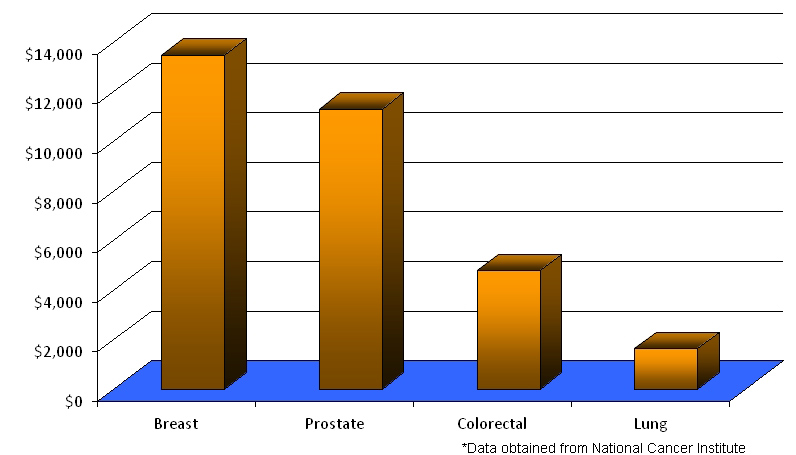
One especially interesting data set is information about cancer funding. Here’s a graph of research dollars spent on cancer type per deaths caused by that kind of cancer.
Breast cancer gets a very disproportionate amount of funding compared to other, deadlier types of cancer. No doubt this is because of successful initiatives like the Pink Ribbon campaign, but these initiatives are themselves due to the fact that any gendered issue is naturally more interesting than any ungendered issue. My guess is this is also part of why prostate cancer (gendered issue relating to men) is in second place, although that could also be its unusually high morbidity/mortality ratio.
The point of this graph isn’t to knock breast cancer research, but instead to note that people disproportionately ignoring women’s issues because they don’t care about women is the exact opposite of the way the world works.
Google Trends shows that ever since the national news story broke, more Americans are searching for information on the Steubenville rape case than on the entire country of Syria, which you may remember has during that period been undergoing a bloody civil war which risks turning into World War III at any moment. Think about it. A single rape case is more important to our culture than a war in which somewhere between 70,000 and 120,000 people have been killed.
This is not the sign of a “rape culture” that dismisses and excuses rape. This is the sign of a culture that has fixated upon it, placed it somewhere between child pornography and al-Qaeda in the List Of Things Everyone Must Talk About All The Time. This is the sign of a national obsession.
If you want to accuse the people in Steubenville who didn’t do anything to help the poor victim of being part of a “rape culture”, then go ahead (but do remember that the same thing happens in every type of crime and is a well-known cognitive bias having nothing to do with rape per se).
But if you want to accuse the American population that paid twice as much attention to it as to the entire Syrian Civil War of trying to deny that rape exists or push it under the rug or something, what are you thinking?