Dermatology Quiz: Answers
Scott provides answers to a dermatology quiz, discussing skin cancer risks, a quiz correction, and the surprising effectiveness of Botox in treating depression.
The first statement on yesterday’s quiz was true. Because Americans sit on the left side of the car when they drive, if they drive a lot they get more UV light to the left of their faces than the right. Therefore, they get more left-sided skin cancer. This picture of a truck driver, linked in yesterday’s comments, provides a good demonstrations of the effect of UV on skin:
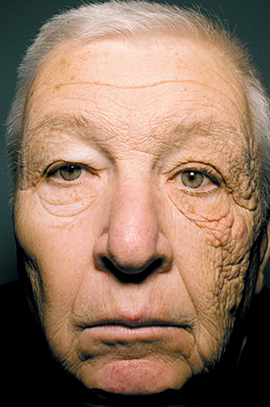 On the other hand, you probably shouldn’t avoid sun exposure entirely, since it seems to protect against cancer – I previously was skeptical of a Vitamin D/cancer link, but sun exposure might operate through Vitamin D-independent pathways.
The second statement was false. At least, it was supposed to be. I tried to invent a distractor answer I was pretty sure was false. Commenter Kolya came up with a really sneaky argument for why it might be true. This just goes to show how easy it is to confound something. Please be reassured that I am not really that tricky.
The third statement was true. See Treatment of depression with onabotulinumtoxin A: a randomized, double-blind, placebo-controlled trial. 52% of botox group responded to treatment vs. 15% of the placebo group (who got injected with nothing; sucks to be them) with effect lasting at least six weeks.
The likely explanation is the “facial feedback hypothesis”, which posits that the brain uses facial musculature as a sort of “notepad” for emotions – if one part of the brain decides to feel happy, it makes the face smile, and then other parts of the brain can check whether the face is smiling a couple minutes later and figure out if they are supposed to be feeling happy. As silly as it sounds, if you paralyze the muscles that frown, that makes it harder to feel sad. Even better, the same treatment improves mood in healthy people without depression.
I actually didn’t realize that last part until I started writing this post. I wonder if the Botox effect is susceptible to happiness set point or not. I could easily see it not being so, which would make it one of the most powerful happiness-boosting interventions that exists and a little less creepy than giving your usual oral or IV drugs to make people happier.
Botox costs $400 a pop and lasts for months. I wonder how that compares to poverty relief, health care, and malaria nets in the utilitarian calculus.
Darnit, just once I want to learn an interesting medical fact that doesn’t end up as a plan to drug the entire population.
(but think how pretty everyone would be!)