Nighttime Ventilation Survey Results
Scott Alexander reports on a survey about nighttime ventilation interventions, finding modest overall improvements but some individual success stories.
Thanks to the 129 people who tried altering their nighttime carbon dioxide levels after my post on this, and who reported back to me. There was no difference between people who pre-registered for the study and people who didn’t, on any variable, so I ignored pre-registration.
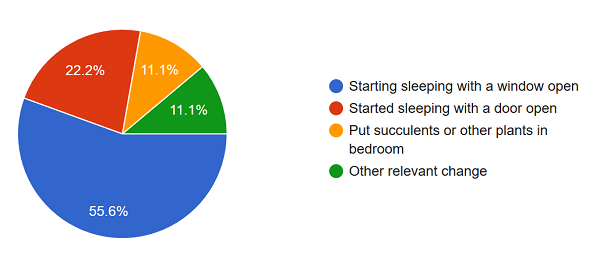
126 people reported one intervention they performed. The most common was sleeping with a window open:
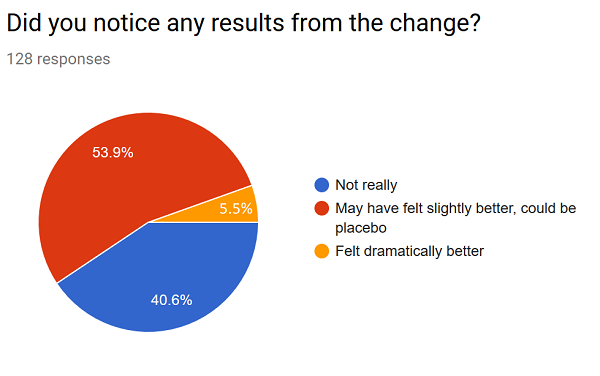
 People generally reported slight but positive changes:
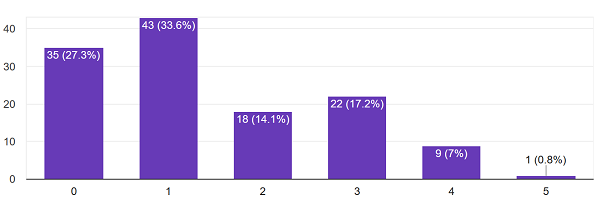
 When asked to rate the magnitude of improvement to well-being on a 0 to 5 scale, they averaged 1.4:
 I mentioned in the post that succulents could help in theory, but you needed to get the right kind of succulents and you needed at least ten of them. I was skeptical that anyone really got ten succulents in their room, so I wondered whether that might work as a crypto-placebo group.
If so, the intervention failed to separate from placebo. Succulent users had an average improvement of 1.29, compared to about 1.50 for people who did other things. The difference wasn’t significant, although admittedly the sample size was low.
Looking at the various groups, the most striking difference was actually people who left a window open (1.57) vs. people who did one of the other named options (1.31). A few people who left windows open mentioned this made their room cooler, which seemed to help with sleep. But this is very post hoc, and this difference wasn’t significant either.
Here are some reports from people who described dramatic improvement:
Less headaches, less fatigue in the morning, less trouble staying asleep through the night
I slept more comfortably, woke less in the night, and felt less fatigue in the morning. I also felt more alert during the day. I used a CO2 meter. Peak level changed from 1400s before to 800s after the intervention.
When I get up I feel less groggy, It takes my brain less time to get on line, I can way more often wake up and do things right away rather than spend time in a stunned haze or distracting myself so I don’t fall back asleep. I feel more like doing things and have the energy to back that up, it lasts some time after I wake up but usually not all day. I feel like I sleep better.
And here are some of the more typical results from people who said they felt only minor or placebo-like improvements:
Possibly more alert upon waking, possibly needing slightly less time sleeping to feel rested
Slightly more likely to sleep through the night and/or feel better rested in the morning.
I don’t recall waking up as often, but maybe it’s a placebo. If it’s a placebo, it’s a cheap/free one and I’m happy to keep taking it as long as it works. Oh god is taking this survey going to make it not work anymore?
Despite the underwhelming results, most people were going to stick with their intervention:
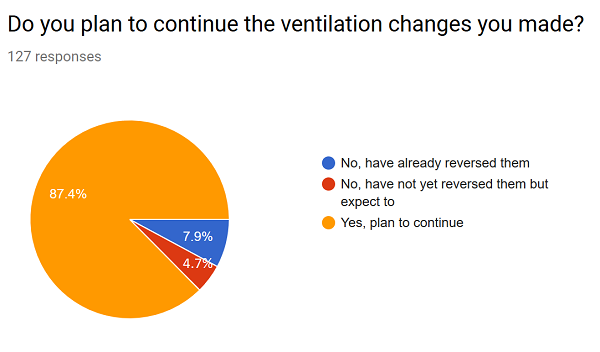 I consider these results basically negative – both for nighttime ventilation, and for the ability of informal blog surveys to give data that one can be confident in either way. But I’m glad some people think they feel better, and the results of the last question suggest it still might be a cheap and productive thing to try.
If you’re interested in analyzing this further, you can download the data at this link.