[ACC] Does Calorie Restriction Slow Aging?
The post examines whether calorie restriction slows aging, concluding it likely does but may not be worth the drawbacks for most people.
[This is an entry to the 2019 Adversarial Collaboration Contest by the delightfully-pseudonymous Adrian Liberman and Calvin Reese.]
About the Authors: Adrian Liberman is currently a PhD student in biology at a university in the mid-Atlantic. He previously worked at the National Institute of Aging and remains actively interested in gerontology and the biological study of aging. Calvin Reese is an author with a BS in Biology. He has always been interested in the possibility of life extension by calorie restriction. Recently, he has reexamined the subject after undertaking a series of intermittent fasts for weight loss reasons. Calvin believes CR extends life; Adrian has long been skeptical.
Introduction: Is food making us old?
We all agree that food is delicious, and we also all agree that too much food is bad for us, but exactly how bad is it? Various academics have proposed that too much food actually accelerates the aging process, and reducing our food intake via calorie restriction (CR) is one of the most accessible and available methods of extending human life. While billionaires pump vast fortunes into increasingly far-fetched stem cell treatments and consciousness transfers, CR advocates contend that they can get a 10-20% increase in their natural lifespans simply by eating a little less. If true, CR raises a question of enormous significance to gerontology and the science of aging: are our diets aging us one calorie at a time? And if so, can we stop it?
Calorie Restriction (CR) and Intermittent Fasting (IF) advocates generally claim that CR will extend your lifespan and prevent various diseases, and that IF is an effective form of CR. Evidencing these claims are animal studies in yeast, worms, flies, mice, and monkeys as well as indirect evidence from humans. A variety of biochemical studies have been performed, and a host of theoretical literature generally claims that the underlying mechanisms for the effect are the IGF axis affecting sugar metabolism, DNA damage mechanisms dealing with free radical formation, and inflammation modulation.
My position (Adrian) is that for the average individual reading this article, CR and IF are not generally worth the effort, because the individual will be exposed to non-trivial risks and the benefits will be minute.
My position (Calvin), is that there exists some amount of food, on average, that will produce an optimal human lifespan and that the average person could significantly extend their life by moderately reducing their calorie intake.
Calorie Restriction (CR) is a term coined to describe a series of experiments that have been conducted over the course of more than a century, demonstrating that various animals kept in laboratory conditions generally survive longer if fed diets that are ‘restricted’. This effect has been observed in bacteria, yeast, worms, fruit flies, mice, and arguably monkeys, so it appears to span every domain of life. (40)
On the other hand, population-level studies say that the lowest observed mortality in western populations occurs at a BMI of ~25. (4)(5) This appears to be a paradoxical result, since a BMI of 25 generally results from a diet that isn’t particularly “restricted”. Why would we observe a lower mortality in lab animals when they are undergoing perpetual mild starvation, but a higher mortality when this happens in humans?
And by extension, should you, the reader, adopt a calorie-restricted diet, or an NIH-approved 25 BMI diet?
Semantics: Calorie Restriction versus just not overeating
First things first. Let’s define some very strict terminology. This will become important later:
Kinds of diets:
• Ad libitum Diet (ad-lib) – at one’s pleasure, or as much food as you would like.
• Ad-lib Calorie Restriction (Ad-lib CR) – a diet that contains fewer (for example 30% fewer) calories than your diet would if you were eating an ad-libitum diet
• Normative Diet (ND) – a diet that is balanced and prevents the onset of obesity. The general analog to USDA’s 2000 calorie diet. (Our term and not in common usage)
• Normative Diet Calorie Restriction (nd CR) – a diet that is balanced, but contains fewer calories than a normative diet (for example 30% fewer)
Once we establish these definitions, the kinds of claims that proponents or opponents can make expand into the following:
Claim 0: You, the reader, should adopt an ad-lib diet
(Nobody claims this, put the chips down!) (null hypothesis)
Claim 1: You, the reader, should adopt an ad-lib CR diet
Claim 2: You, the reader, should adopt a Normative Diet
Claim 3: You, the reader, should adopt an nd-CR diet
For the purposes of this article, we’ll be assuming that you, the reader, are an average American of indeterminate sex.
First the claims of CR in detail:
Animal Studies and the NIA Interventions
CR relative to ad-lib leads to improved metabolic function in the animals studied, generally because they do not become obese. On the other hand CR relative to a normative diet leads to unfavorable/negative outcomes including a decrease in fertility, altered mental states, and muscle wasting, but also a significantly increased lifespan.
A Calorie Restriction experiment goes like this: Take some animals and first establish the amount of nutrients they consume “normally”, or under optimal growth conditions. After this, take half of those animals and provide them access to all the micronutrients and amino acids they want, but restrict their access to raw energy in the form of fats or carbohydrates to X% of their normal intake.
Where does this lead to increased lifespans? Let’s start at the beginning! The beginning of time:
CR dramatically extends the lifespan of yeast. (39) Yeast longevity is difficult to quantify, but experiments have suggested 75% CR in yeast (done by decreasing glucose concentrations in yeast media from 2% to 0.5%) extends yeast longevity by a factor of 3. (39)(40). Single-celled organism lifespan is a goofy term, but it can be measured both directly by looking under a microscope at cells and keeping track of when they kick it, and indirectly by comparing the steady population of cells to how often they divide.
Nematodes (worms) exposed to 50-75% CR experience a 2-3 fold increase in longevity. CR in Drosophila melanogaster produces between 30% and 100% increases in the observed lifespan of the flies. (40)(41) Many hypotheses have been proposed to explain why CR produces such marked increases in the lifespan of worms, flies, and yeast, but most notable is the behavior of the SIRT-family genes. (71) Unfortunately the SIRT mutation data is difficult to interpret due to the relatively central role SIRT genes tend to play to the functioning of a diverse array of cells, but some theories are more convincing than others. More on this later. Of course, in general, the problem with studies like these is that establishing what constitutes a normative diet in organisms like these is somewhat subjective. Is there such a thing as an obese yeast cell? On the other hand, a normative diet for rodents is pretty easy to establish.
Numerous studies and overwhelming evidence show that CR significantly extends the lifespan of rats. Rodent CR studies suggesting CR extends lifespan go back to the 1930s and 1940s (26) (30). The earliest rodent CR studies focused on longevity with modern approaches and methods were conducted in the 1980s. Pugh et. al in 1992 (27), Yu et. al in 1985 (28), and Weindruch and Walford in 1982 (29), all subjected rats to 40% CR diets compared to ad lib baselines and found between 10 and 20% increases in longevity as compared to normative diets. Similarly, 1986 Weindruch is a gold standard mouse CR study. Here we see that even fairly aggressive ndCR produces extended average and maximum lifespans, both relative to ad-lib and relative to a normative diet, with a normative diet extending lifespan 20% relative to ad-lib, and 40% ndCR extending lifespan another 30% on top of that. (Context: think big fat guy keeling over from a heart attack at 50, vs everyone’s stereotypical tiny Chinese grandma, who spends her 100th birthday stubbornly refusing to reveal the location of her phylactery)
Reported health benefits of CR in rodents include reduced cancer risk in p53-deficient mice (33), increased proteasome activity (34) in mice and rats, improved cognition (32)(35), reduced oxidative stress and NF-kB signaling (36), and various other health benefits. Several studies, including Park et. al. and Pires et. al. have observed dramatic changes in insulin signaling and serum glucose levels (32)(37)(38), which has been of particular interest to gerontology researchers. IGF signaling has been proposed as one of the mechanisms by which CR improves health outcomes (15).
So far this is a pretty strong story. What’s the sketch factor of this evidence? Well… Some rat and mouse strains responded to CR better than others and methodology varied widely between rodent trials, making them difficult to compare (32). The only study performed on wild-caught mice that aren’t buried under a mountain of genetic defects to shame the Habsburgs had a negative outcome. As a model for aging, mice are also slightly suspect because unlike most mammals, they are globally telomerase-positive, which means that the effects of mutational accumulation on their soma don’t directly translate to other mammals, since oxidative damage has a large interplay with telomeric senescence.
Overall, however, we agree that mouse lifespans are significantly extended by CR. But…
As the organism becomes larger and more complex, the beneficial effects of CR on lifespan appear to taper off (40). 25% nd CR extends dog lifespan 25% (66). Why isn’t more aggressive CR investigated in dogs? Larger animals don’t tolerate aggressive caloric restriction well, 40% caloric restriction would likely kill most dogs. It seems that brains are probably to blame, because the metabolic rate of the brain is generally not significantly regulated (70). If you run out of energy for running your brain cells, you’re done for. The larger the proportion of your metabolism dedicated to maintaining brain function, the less CR you can tolerate.
So, given that trend, the most relevant information for humans should probably come from monkeys. (#freescopes)
Unfortunately, monkeys live a long time, so studies of monkey aging are measured in many decades and cost millions and millions of dollars. The National Institute on Aging and the University of Wisconsin have taken on the task and subjected ~40 rhesus monkeys each to 30% CR. In the WNPRC study, CR was versus an ad lib baseline and in the NIA study CR was relative to a standardized diet designed to prevent obesity. (1) (3)
Rhesus monkeys have a maximum lifespan of ~40 years, and after 30, the WNPRC study reported only 13% of the CR group had died of age-related causes, whereas 37% of the control group had died. (1) The authors write “CR reduced the incidence of diabetes, cancer, cardiovascular disease, and brain atrophy.” (1) In 2017, 10 of the WNPRC CR group animals remained alive compared to 3 animals in the control group. (31) In a monument to absurd timelines, the WNPRC study is not yet over, as many CR monkeys survive in 2019. No mean lifespans are established.
Here we hit our first snag. In complete contrast to the WNPRC study, the NIA rhesus monkey study used a standardized diet designed to prevent obesity for the control group. The NIA study found no increase in survivability among the CR group. (3) What gives?
If we were being charitable, we would say that monkey studies are ridiculously hard to power properly. With only 86 monkeys present in the NIA study, the negative observation could easily have been a product of chance that was inadequately represented by the reported p-values, and we should defer to priors based on other mammals. Anecdotally, and though the NIA paper would never admit to this, the NIH sometimes staffs monkey studies of this kind with “leftover” monkeys from clinical trials that may have mysterious medical conditions that are not obvious to the naked eye but were caused by drug trials, experimental surgical procedures, etc.
If we wanted to be less charitable, we would look at the fact that the WNPRC study pulled shit like this:
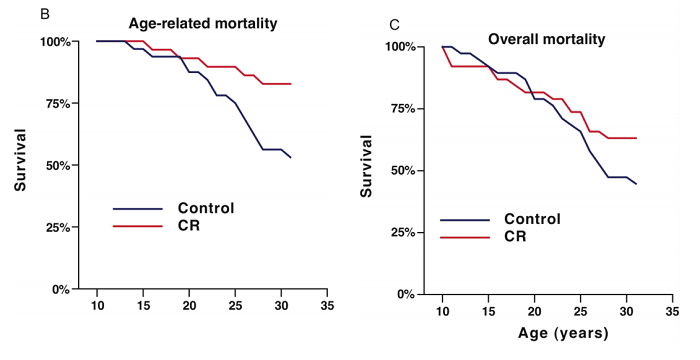 …and point out that aging is almost by definition a process that impacts the survival rate relative to any injury, so trying to disentangle “age related” mortality from regular mortality is bad and wrong.
The most significant difference between these studies is the use of adCR (Wisconsin) vs ndCR (NIA). It’s no surprise that monkeys that are on a controlled diet are healthier and live longer than monkeys that are fed an ad-libitum diet. In mice, this is a commonly known problem for control populations, and monkeys are no different (72). The balance of evidence probably tilts against the idea that CR is effective in monkeys, however our priors that ndCR should be effective are fairly strong, so for now let’s assume that it is.
Adrian concedes that a 2017 statistical analysis of both studies by the University of Alabama at Birmingham in cooperation with the authors of the original studies determined that CR decreased mortality in rhesus monkeys (31), but the study is presented under protest because combining ndCR and adCR in the same analysis is inadvisable, disingenuous, probably illegal, and was the direct cause of the sinking of the Lusitania.
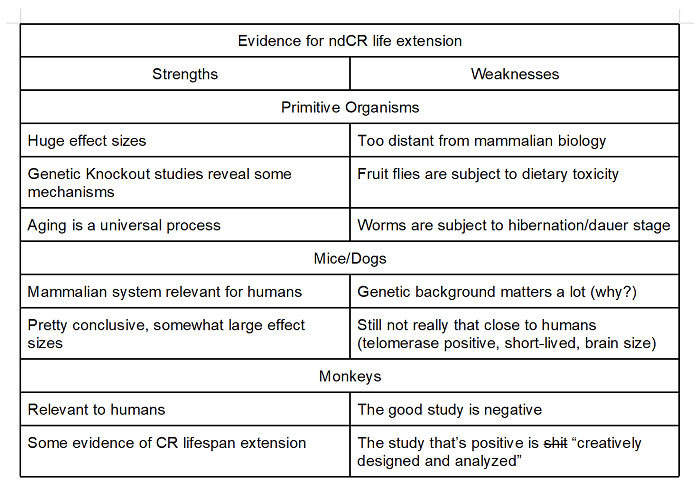 The gold standard of CR studies in animals with respect to human health would be studies that occur in higher animals (mice, dogs, monkeys) and perform CR relative to a normative diet. On the balance, evidence that ndCR extends lifespan in higher animals is fairly strong. The monkey problem, however, is pretty bad, and we remain skeptical of the strength of CR in humans.
Despite these objections, we agree that CR promotes longevity and reduces all-cause mortality of animal model organisms and that this finding supports the view that CR probably increases the lifespans of humans in an ideal scenario.
So… what’s up with that? Do the above findings mean that we need to radically reinterpret what being overweight or obese means? Are we just WILDLY overestimating the “healthy” weight for all these animals?
In a word, no. Animals are clearly not adapted to undergoing caloric restriction this severe. How do we know that? Easy. The animals in most of the experiments above, under fasting conditions, are driven sterile. From an evolutionary standpoint, it’s safe to assume that being sterile is not an adaptive trait, so clearly most animals have not evolved to operate at levels of caloric restriction this severe on a routine basis. That’s one of the simpler distinctions between a “healthy weight”, obesity, and being in a starvation regime. Still, clearly animals live longer when they are starving, so why?
Proposed Mechanism by Which Food Makes You Old (and how calorie restriction stops it)
First an interlude: aging is one of the last frontiers in biology where major theories still compete on an even footing to explain a basic and universal process. The simplest definition of aging is the observation that past a certain point in an animal’s life, the likelihood that it will die doubles every period X, where X is different for different species. This observation is stunningly universal. It’s also important to note that the likelihood of death from almost any type of injury increases over time, so aging is not just the idea that cancer is more frequent when you’re 50 than when you’re 20, but the idea that almost all diseases are more frequent in older individuals, and dying from almost any injury is more likely when you are old than young (78, Arkin).
Covering the slapfight over the specific mechanism involved fully is beyond the scope of this paper, especially because there are no conclusive answers to any of your questions, but briefly these are the major aspects of biology that change with age, drawing directly from “The Hallmarks of Aging” Lopez-Otin et al. (44).
1) genomic instability, such as replication errors, mutations, DS breaks, and crosslinking;
2) telomere attrition, including damage to the telomeres that does not result in telomere shortening;
3) epigenetic alterations, including changes in methylation patterns, histone modifications, and chromatin remodeling. This generally also leads to deregulated/erroneous gene expression;
4) loss of proteostasis, which is characterized by protein denaturation or unfolding and the accumulation of waste products your body cannot break down;
5) deregulated nutrient sensing, causing both the cell and the body to become less responsive to nutrients;
6) mitochondrial dysfunction, which is thought to be particularly central to the relationship between CR, obesity, and aging because mitochondria process glucose and create reactive oxidative species (ROS);
7) senescense or quiescence, the cessation of the cell cycle; and
8) stem cell exhaustion, which slows or halts renewal of virtually all tissues and cell types.
These are specific, measurable instances of the general breakdown we associate with aging chosen for their correlation with chronological and apparent age. None of them has been decisively established as the actual cause of aging as we understand it, though all are understood to contribute to aging at the cellular and tissue level, which is the general breakdown and cessation of cell functionality (44).
Gerontologists love to whip these hallmarks out, but in reality most of them are interrelated in some way, so establishing which ones of them are merely the byproducts of other is extremely difficult. Ex: mitochondrial dysfunction increases the rate at which oxygen radicals are produced leading to greater genome instability and telomere attrition. Stem cell exhaustion probably arises from genomic instability or nutrient sensing deregulation, but on the other hand it can lead to senescence in the tissues as replacement of dying cells slows down. It’s all an ouroborosian mess. (44)
Almost all of the hallmarks have been shown to be impacted by food intake. Obesity has been decisively implicated in causing genomic instability in model animals, but evidence is lacking in humans (45). Crucially, the CR-ROS hypothesis that excessive eating, causing both oxidative damage from digestion and metabolism of glucose and obesity – thus linking obesity and ROS damage together, remains poorly supported in humans (45)(46). Obese adult individuals suffer from greater telomere attrition than non-obese individuals and have shorter telomeres (47). Obese individuals have profoundly different epigenetics than non-obese individuals, which is not surprising, since insulin expression profiles and fat metabolism are well-established as being changed by, and changing, epigenetics (46)(48)(49). In fact, epigenetic changes in insulin expression due to a high-fat diet may be heritable (48). Obese individuals, and particularly diabetes patients, have markedly different DNA methylation patterns from non-obese persons and modified chromatin structure (49) Altered chromatin density due to obesity has been observed in rodents and implicated in the onset of dementia, which is commonly associated with old age (50)(51). Numerous proteasome dysfunctions and significant protein misfolding have been observed in obese rodent and human subjects (46). In addition to creating insulin resistance, human adipose tissue creates a pro-inflammatory environment and significantly alters cell response to NF-kB and inflammatory cytokines (52). Obesity has been specifically implicated in ROS damage to mitochondria, mitochondrial dysfunction, reduced mitochondrial fission, and further elevated ROS production by the Krebs cycle (53). Furthermore, adipose tissue and obesity apparently promote senescence (54). Obese mice exhibit dramatically increased rates of T-cell senescence (55). Finally, obesity results in far greater stem cell exhaustion and quiescence (56). Adipose tissue stem cells, hematopoetic stem cells (HSCs), bone marrow, and other stem cell reserviors have all demonstrated higher rates of quiescence in obese populations of rodents and humans (46).
So, we have covered all eight biomolecular cell and tissue-level hallmarks. Obesity does, in fact, make us older. And we are pretty sure CR makes most animals younger. That is an excellent clue as to how the two are related, and which of the mechanisms might be the most important.
Your body usually converts sugar into mechanical or chemical energy by using a complicated daisychain of a couple dozen proteins called the Electron Transport Chain (ETC). The ETC is so called because each protein in it contains an electrically charged amino acid that is highly reactive due to holding on to loose electrons that came from sugar. The ETC takes electrons obtained from sugar, and attempts to stick them onto molecules of oxygen, converting it into water. Unfortunately, this process occasionally fucks up, and instead of getting nice benign water, the oxygen becomes radicalized, gets an Al-Qaeda franchise, and becomes either Hydrogen Peroxide or the Superoxide anion. Both of these are comically reactive molecules, and if they happen to diffuse out of the mitochondrion, they can react with pretty much anything and cause damage. If they react with your DNA, you’re in trouble, because oxidative damage to your DNA produces mutations. Similarly, the oxidation of fats results in chemicals that cause inflammation, and the oxidation of proteins can result in byproducts that your body can’t break down.
From here comes the Rate of Living Theory: an animal can consume only a specific and finite number of calories in its lifetime, because after that point the damage induced by said calories becomes fatal.
Essentially, for a given cellular architecture, so many calories in results in so many molecules of peroxide and superoxide out, and so many mutation events in DNA, oxidized proteins, and rancid fats. Inside you there are populations of cells that can tolerate only a finite amount of oxidation events, namely heart muscle fiber nuclei, neurons, and long-term stem cells like marrow and fibroblast stem cells. For these tissues, the DNA you have is the DNA you get, and you can only expose it to so much chemical damage before it stops functioning. Similarly the accumulation of other byproducts would be fatal.
While there is some slight debate about this, the balance of evidence is that CR slows down the metabolism of most tissues relative to their quantity (74,75), so it should definitely allow you to stretch your “mutation budget” over a longer timeframe. This theory predicts that you can extend your remaining life by X% by cutting X% of calories out of your daily food intake. Napkin math tells us that this basically tracks with the results we saw above, and the limitation on this is obviously starving to death.
Hopefully at this point we have exhaustively convinced you that Calorie Restriction definitely works in small animals, probably due to inhibiting oxidant production, and it might work in humans, though the theoretical backing for this is dicier.
So we return to our claims. Should you eat an ndCR diet?
First we have to take care of Chesterton’s Fence.
Population Aging Studies and Human Trials
Why is it commonly recommended to consume ~2000 calories per day? And where does this number come from anyway?
Dietary guidelines approach the question of how much food you can eat epidemiologically, by asking what kinds of mortalities are associated with various food intakes.
A meta-analysis of large-scale population studies concludes that a BMI of roughly 24, considered to be “normal” weight, is associated with the minimum long-term all-cause mortality. (5) (4), and once BMI exceeds 30, all-cause mortality begins to sharply increase. (5) (4) A CDC estimate for the 2015-2016 period found that 39.8% of adults were obese, and it is not unreasonable to assume that the average American BMI is roughly 30 based on huge body of evidence. The interesting aspect of these studies lies in the fact that BMIs below 25 are likewise associated with increased mortality (5)(4). Direct observational data of western populations is nearly unanimous in showing that BMIs below 25 are correlated with bad health outcomes.
So here we meet the fundamental paradox: Why is it that we can observe lab animals living longer in the face of CR, but when we observe humans, we generally find an association between mortality and low body weight?
Epidemiologic studies on low BMIs in western populations become a little hazier. There is fairly wide agreement that BMIs below 25 correlate with lower survival, but not usually a clear claim as to why. BMIs below 25 generally appear to correlate with smoking. Excluding the effects of smoking, people with BMIs below 25 still appear to have increased all-cause mortality. This could be from correlations to weight loss from cancer and metabolic diseases, tuberculosis, or something similar. While the effects of obesity on risk of mortality are very clear, the effects of being underweight and starvation on health are obviously the source of our core paradox (4).
Even studies that attempt to exclude acute illnesses that commonly induce weightloss seem to find higher rates of death among men that are underweight across a wide range of causes. Most troubling is the fact that an under-consumption of calories has a documented effect of suppressing wound healing and immune response, and worsening the progression of infectious diseases (67-69). From this standpoint, it’s altogether unclear whether the low weights observed in these studies are induced by the diseases in question, or whether diseases are simply more prevalent in people with BMIs below 25.
Calvin’s hypothesis, though unsupported by evidence, is that no one is actually on a CR diet.
A CR diet is reduced calorie intake without malnutrition. Some of the people with BMIs below 25 may have an underlying health issue, such as HIV, which is causing their BMI to drop or mortality to rise, but I speculate that most people with a BMI below 25 are suffering from malnutrition, which is causing the increased mortality observed in persons with BMI below 24-25. Sarcopenia in the elderly is another possibility, though age-adjusted studies appear to refute this hypothesis (4).
We can attempt to look at other cultures to see if lower caloric consumption has similar effects there.
Gerontologists and anthropologists have observed that the longest-lived national and ethnic groupings of humans tend to eat the least. Japan has long had the highest life expectancy of any developed country (20). Japanese life expectancy at birth stood at 87.17 years in 2016, as compared to 81.40 years for the United States and 84.43 being the average of 18 high-income countries (20). Japanese are estimated to eat 23% less than Americans (21).
However, this finding is purely correlational in nature. Although reverse causation – that people eat less because they live longer – can be ruled out, the correlation could be coincidental, pleiotropic, or for genetic rather than dietary reasons. The FOXO3A gene, rather than CR, has been proposed as the reason for variations in longevity between ethnic populations (17). Several other genes, like APOE and CETP, have been suggested as alternative genetic causes of these ethnic longevity differences (18). Gerontologists have aggressively suggested that smaller humans tend to live longer (4) (13) (14), and that members of ethnic or national groups, such as the Japanese, who live longer tend to be physically smaller, and centenarians within this ethnic group tend to be smaller than those who live shorter lives (13). One proposed reason that smaller individuals and ethnic populations tend to live longer is lower levels of GH and IGF-1 due to genetic factors (15). As has been discussed, IGF-1 is associated with increased mortality due to various illnesses and also makes the individual physically larger. CR advocates have equally argued that social, environmental, and economic factors causing CR in these population groups cause the drop in GH and IGF-1, increasing longevity in these groups. A Washington University study of the effects of CR on a group of humans on a long-term diet of 1800 kcal per day versus an experimental group ingesting 2500 kcal per day found no decrease in serum IGF levels from baseline unless protein intake was also restricted (16). This result is at odds with rodent studies, which showed decreases in IGF-1 concentrations in CR subjects versus those on normative diets (16). Other results contradict these findings. A Tufts 30% CR trial among mildly overweight (BMI 25-29.9) young adults showed significant decreases in serum insulin concentrations, contradicting the Washington University results (25). Many, many other human trials have produced contradictory results in CR trials, with the severity of the CR, weight, and age of the patients, as well as compliance with CR, having been variously proposed as explanations (21).
There is also compelling evidence in favor of CR and dietary explanations as the cause of longevity in particular populations. For example, the ethnically distinct Okinawans were for generations the Japanese ethnic group with the greatest longevity; the island has 4-5 times the centenarians per capita of any industrialized country (21). Little racial admixture has occurred on Okinawa, but as the Okinawan diet has westernized, the Okinawans have lost their longevity advantage, with Okinawan longevity dropping below the rest of Japan in 2005 (19). Older Okinawans, who continue to eat CR and protein-restricted traditional diets, have greater longevity compared to Japanese populations of equal age. For Okinawans age 60-64, all-cause mortality was half that of Japanese persons of equal age (22). Evidence from natural “experiments” during mandatory rationing and food shortages also supports the CR hypothesis. Involuntary food rationing during the World Wars also paradoxically increased lifespan. WWI-era rationing in Denmark resulting in a 34% drop in mortality over a two year period (21)(23). Similar rationing in Oslo during WWII, thought to be equivalent to 20% CR, resulted in a 30% drop in mortality (24).
The longest lived humans tend to eat the least. Though causation – whether CR causes decreased IGF levels or decreased IGF levels cause CR – cannot be definitively established, the conclusion, supported by rodent studies and defensible from surveys of humans, that CR causes a drop in IGF levels remains compelling.
So, should you, mean American Reader with 1.5 X chromosomes, adopt a CR diet? WHAT COULD GO WRONG?
Acute Risk Factors of Caloric Restriction
A good first place to look is the Minnesota Starvation Experiment. Conducted around 1944 on 32 volunteer males, the object of the experiment was to subject humans to a 25% calorie-restricted diet that simulates 6 months of famine and observe the effects. Diet was strictly controlled by housing subjects in a special dormitory and supervising them during their time outside of it. Despite the simulated famine conditions, diets were formulated to ensure that subjects received daily minimum intakes of important vitamins and minerals
An exhaustive description of the effects can be found in The Biology of Human Starvation, by Keys, but let’s go through the highlights. (70, not available online but try to find it at a library. Equal parts fascinatingly and grim, but occasionally also very funny)
First the physical: subjects of the experiment underwent a substantial drop in bodyweight (duh) over the first few weeks, after which their weight stabilized at 75% of their original bodyweight, as was the design of the experiment. In terms of physical strength and work capacity, subjects experienced loss of motor coordination, loss of strength, and a devastating negative impact on their endurance. Counts of all blood cells were down across the board per unit volume of blood, and in absolute terms. Subjects had a lowered basal metabolic rate, and an observed drop in surface but not core body temperature. Severe caloric restriction (15%+) also leads to a sharp fall in fertility for both men and women. Women undergoing caloric restriction may stop menstruating. (not observed in the Minnesota study, which was all-male) Finally, a starvation state can lead to bradycardia, starvation edema, fainting, and looking like a cartoon skeleton (70)(77).
Psychologically, the first and most significant observed effect was a severe preoccupation with food, and a permanent feeling of being cold. The latter was both a true sensory perception (skin temperatures of subjects were lower than normal) and a subjective sensation. Additionally, subjects experienced a loss of sexual interest. The subjects were capable of achieving erections physiologically, but not psychologically. Subjects also felt a loss of motivation to engage in self-improvement or social activities. By month 6 of semi-starvation, more than half of all subjects were routinely failing to complete basic maintenance tasks such as cleaning, and most had dropped out of university classes they were initially attending. After subjects were released from the experiment, several developed eating disorders, and fasting in general can induce eating disorders where none were otherwise present, both binging and anorexia.
Advocates of intermittent fasting, which is a diet that is much easier to maintain, often say that you eventually adapt to the feeling of acute, distracting hunger that strikes you when you are on a short (eg 1 or 2 day) fast (Original research). No such adaptation was observed for the subjects of the Minnesota experiment, and if anything morale of the subjects deteriorated steadily throughout all 6 months of the experiment. In principle, we need not assume that you cannot psychologically adapt to permanent starvation conditions, however mice that undergo lifetime caloric restriction do show a permanently depressed level of motility, eg they just hate moving around.
Evidence from other sources also indicates that lowered caloric intake leads to worsened progression of infectious diseases and slowed wound healing. This point may initially appear controversial because some studies indicate faster and greater response to mitogens, but studies using live pathogens prove this point fairly conclusively. Crucially, this aspect of starvation biology is one that would not be revealed in CR Mouse studies. Lab mice are generally kept in aluminum shoeboxes in a strictly sterile environment most of their lives. They have little opportunity to suffer injuries or heal from the same, and rarely experience infections. If they do, they are quite likely to die and be excluded from analysis. Unless you happen to live in a sterile aluminum shoebox as well, consider this as you interpret CR studies (67-69).
How does this square with the smaller diets in East Asia? Okinawans reportedly ate a diet that was at a similar level of caloric restriction (20% relative to western ND) to the Minnesota experiment, however obviously the entire island wasn’t driven sterile or languid. Note however, that this difference is reported only in absolute terms, not as calories per unit of body weight. Factor 1 is probably stature. Long-term caloric shortages have been shown in both mice and humans to lead to shorter stature and smaller size. If you were reared from youth to eat a relatively smaller diet, your long-term caloric requirements could probably be lowered somewhat. This is borne out in the average heights and weights of Okinawans of this time period, often reported to be less than 5 feet tall. This also squares with studies on longevity between different mouse strains, which routinely report that smaller overall stature (or length) has a positive correlation to longevity.
Factor 2 may be local weather conditions (Okinawa is sub-tropical) Temperatures have an impact on the ability to tolerate a restricted diet long-term. One notable result observed in investigations of Okinawans is the higher thermogenesis and lower oxygen consumption in Japanese and Okinawan mitochondrial haplogroups, suggesting both lower generation of ROS, and likely an ability to tolerate lower caloric consumption while maintaining adequate body temperature (76), which is an important aspect of determining basal metabolic rate. The BMR of Japanese people and Okinawans can be considered as lower or higher depending on whether it is measured through thermogenesis or oxygen consumption, which measure subtly different things.
This discrepancy suggests to us that even in the event that you are able to maintain a traditional Okinawan diet, if you were reared in America, it’s quite possible that you would have the ol’ Minnesota Boner Downer experience attempting to do so.
The outcomes of a lesser caloric restriction would be easier to tolerate for the average westerner, but will also be less effective. Whether there exists a sweet spot in which you are calorically restricted, but don’t hate life and can lift a broom is probably a subjective judgement.
Overall Conclusions
None of the evidence in favor of CR is indisputable. CR-ROS, the hypothesis that calorie restriction reduces oxidative radicals, remains compelling, but direct evidence in humans is lacking. Numerous model animal studies have shown a link between CR, reduced mortality, and life extension. Population studies support the CR hypothesis, but the effects of CR cannot be easily disentangled from genetic, social, environmental, or non-CR dietary factors. CR experiments in humans and rhesus monkeys produced contradictory results, and in some cases the tradeoffs between early and late mortality are a judgment call. Progerias in the obese and biomolecular evidence of cellular and tissue-level anti-aging effects of CR remain the strongest evidence for CR’s potential to extend human life.
We, the authors, conclude that the evidence as it stands weakly supports the conclusion that CR modestly extends human life. We expect that an individual engaging in 20-30% CR versus a normative, non-obesogenic diet without malnutrition might enjoy a 10%-20% increase in longevity. A 10%-15% CR relative to a normative diet may increase lifespan by perhaps 5-10%.
As with all good science, this conclusion raises still more questions. 20-30% CR might result in a 10% increase in longevity, but is that worth it? Calvin, one of the authors, is a practicing intermittent faster and can testify that CR and IF are unpleasant, difficult, and sometimes painful.
Scientific investigation adds another layer to this subjective answer: starvation conditions are likely to expose you to infections of greater severity, potential sterility, negative impacts on your physical abilities, and subjective but significant impacts on your psychological state, including motivation, attention, and libido.
The field of gerontology and the general study of aging continues to lurch forward – not at the pace we want it to, necessarily, but it’s still developing anyway. New drugs and treatments, including stem cell activators like GDF11, senolytic drugs, and anti-inflammatory interventions may be able to make many of the benefits of CR redundant in the relatively near future (we hope).
While CR would probably extend your life, we, the authors, don’t advocate it. The risks and miseries aren’t trivial and you probably have to go to work in order to exchange money for goods and services.
Claim 2: You, the reader, should adopt a Normative Diet
True (and basically the same as an adCR diet)
Claim 3: You, the reader, should adopt an nd-CR diet
Debatable, but no.
If you are interested in the best current options for life extension, you should consider a long-term aspirin regimen, maintaining a healthy body weight, and building a nuclear bunker in your backyard.
All the best,
–Calvin Reese, Adrian Liberman
PS(A): PLEASE NOTE: If you are over 75 years old, do not attempt Calorie Restriction. If your grandma is over 75 years old, go to her house and pour soup into her until she is overweight. This is not a joke and is entirely serious advice. Among the very elderly, being overweight serves as a protective factor that mitigates the dangers of death due to traumatic injury. The dangers of heart attacks and diabetes associated with excess weight are less than the dangers associated with sarcopenia and cachexia. Elderly people usually experience a loss of strength in esophageal muscles and for them swallowing food becomes more difficult, leading to a vicious cycle of muscle weakness and weight loss. If you have an elderly relative, please make sure they’re eating enough.
PPS: Studies excluded from this review: CALERIE: conformity to study protocol was terrible, duration too short, and they took overweight people and got them to baseline. Total tripe on a bike. CRONies: lmfao. Be skeptical of studies claiming to observe DR in a human population. Talking a large group of people into actually following a strict DR regimen long-term is borderline impossible because it fucking sucks. Sample was also self-selected.
Bibliography
1. https://www.ncbi.nlm.nih.gov/pmc/articles/PMC2812811/ – Wisconsin Monkeys
2. https://www.ncbi.nlm.nih.gov/pmc/articles/PMC345016/ -84 adiposity
3. https://www.ncbi.nlm.nih.gov/pmc/articles/PMC3832985/ – NIA Monkeys
4. https://www.ncbi.nlm.nih.gov/pmc/articles/PMC4115619/ – Mortality data
5. https://www.ncbi.nlm.nih.gov/pmc/articles/PMC2662372/ – BMI meta-analysis
6. https://qz.com/255210/turns-out-the-way-americans-measure-healthy-weight-is-totally-wrong/ – media report on American obesity (for estimating average BMI)
7. https://www.nbcnews.com/healthmain/real-shape-american-man-dudes-youre-porky-8C11394082 – media report on American obesity (for estimating average BMI)
8. https://www.theatlantic.com/health/archive/2013/10/this-is-the-average-mans-body/280194/ – media report on American obesity (for estimating average BMI)
9. https://www.cdc.gov/nchs/data/hestat/obesity_adult_13_14/obesity_adult_13_14.pdf – NIH obesity 2013-2014
10. https://www.cdc.gov/nchs/data/databriefs/db288.pdf – CDC obesity 2015-2016
11. Dixon, John B. “The effect of obesity on health outcomes.” Molecular and cellular endocrinology 316, no. 2 (2010): 104-108. https://doi.org/10.1016/j.mce.2009.07.008
12. https://www.ahajournals.org/doi/full/10.1161/ATVBAHA.111.241927 – biomolecular consequences of obesity
13. https://www.ncbi.nlm.nih.gov/pmc/articles/PMC3354762/ – various characteristics of centarians
14. https://www.ncbi.nlm.nih.gov/pubmed/12208237/
15. https://www.ncbi.nlm.nih.gov/pmc/articles/PMC3893695/ – effects of IGF and GH on body size, longevity, and mortality
16. https://www.ncbi.nlm.nih.gov/pmc/articles/PMC2673798/ – effects of CR and protein restriction on IGF serum levels
17. https://www.ncbi.nlm.nih.gov/pmc/articles/PMC4707876/#MXS013C74 – FOXO3A variation and longevity
18. https://www.ncbi.nlm.nih.gov/pmc/articles/PMC4296168/ – APOE variation and longevity, supports FOXO3, refutes others
19. https://www.ncbi.nlm.nih.gov/pmc/articles/PMC3362219/ – Okinawan longevity
20. https://www.ncbi.nlm.nih.gov/pmc/articles/PMC6092679/ – global life expectancy trends by country
21. https://www.ncbi.nlm.nih.gov/pmc/articles/PMC5315691/ – lots of stuff, general review of CR
22. https://www.ncbi.nlm.nih.gov/pubmed/16810568 – calorie restriction in Okinawa
23. https://jamanetwork.com/journals/jama/article-abstract/223580 – involuntary rationing in Denmark during WWI
24. https://www.ncbi.nlm.nih.gov/pubmed/14795790 – involuntary rationing in Norway during WWII
25. https://www.ncbi.nlm.nih.gov/pubmed/17413101 – Tufts CR study that showed decreased insulin levels in overweight subjects.
26. https://academic.oup.com/jn/article-abstract/21/1/45/4725572 – 1941 rodent CR study
27. https://www.ncbi.nlm.nih.gov/pubmed/10197641/ – Pugh et al. 40% rodent CR study
28. https://www.ncbi.nlm.nih.gov/pubmed/4056321/ – Yu et. al 40% rodent CR study
29. https://www.ncbi.nlm.nih.gov/pubmed/7063854/ – Weindruch and Walford rodent CR study
30. https://www.ncbi.nlm.nih.gov/pubmed/2520283 – 1935 McCay rodent CR study
31. https://www.ncbi.nlm.nih.gov/pmc/articles/PMC5247583/ – 2017 combined Rhesus monkey study
32. https://www.ncbi.nlm.nih.gov/pmc/articles/PMC5565679/ – review of rodent CR studies
33. https://www.ncbi.nlm.nih.gov/pubmed/12016155/ – reduced cancer risk in p53 deficient mice
34. https://www.ncbi.nlm.nih.gov/pubmed/17460208/ – increase proteasome activity in CR mice and rats
35. https://www.ncbi.nlm.nih.gov/pubmed/18002475/ – improved cognition in CR mice and rats
36. https://www.ncbi.nlm.nih.gov/pubmed/19199090/ – anti-inflammatory effects of CR in rodents
37. https://www.ncbi.nlm.nih.gov/pubmed/16920310/ – improved glucose tolerance and lower insulin levels in CR rodents
38. https://www.ncbi.nlm.nih.gov/pubmed/24844367/ – drop in serum insulin in CR rodents
39. https://www.ncbi.nlm.nih.gov/pmc/articles/PMC3696189/ – review on budding yeast longevity
40. https://www.ncbi.nlm.nih.gov/pmc/articles/PMC3607354/ – review on longevity in general
41. https://www.ncbi.nlm.nih.gov/pmc/articles/PMC1857724/ – Drosphila CR review
42. https://www.ncbi.nlm.nih.gov/pmc/articles/PMC3181168/ – Progeria rapamycin
43. https://www.ncbi.nlm.nih.gov/pmc/articles/PMC6509231/ – “Obesity May Accelerate the Aging Process”
44. https://www.ncbi.nlm.nih.gov/pmc/articles/PMC3836174/ – The Hallmarks of Aging
45. https://www.ncbi.nlm.nih.gov/pubmed/30115431/ – genome damage by obesity
46. https://www.ncbi.nlm.nih.gov/pmc/articles/PMC6509231/ – obesity/aging review
47. https://www.ncbi.nlm.nih.gov/pmc/articles/PMC2805851/ – telomere attrition in the obese
48. https://www.ncbi.nlm.nih.gov/pubmed/21088573/ – nutritional epigenetics
49. https://www.ncbi.nlm.nih.gov/pubmed/24779963/ – methylation patterns and diabetes
50. https://www.ncbi.nlm.nih.gov/pubmed/24154559/ – obese TD2 rat chromatin density
51. https://www.ncbi.nlm.nih.gov/pubmed/25380530/ – more obese rodent chromatin density
52. https://www.ncbi.nlm.nih.gov/pubmed/27503945/ – pro-inflammatory environment of adipose tissue
53. https://www.ncbi.nlm.nih.gov/pubmed/29155300/ – mitochondria ROS/dysfunction in the obese
54. https://www.ncbi.nlm.nih.gov/pmc/articles/PMC2941545/ – obesity and senescence review
55. https://www.ncbi.nlm.nih.gov/pmc/articles/PMC5127667/ – obesity and senescence in mice
56. https://www.ncbi.nlm.nih.gov/pubmed/22772162/ – stem cell quiescence in adipose tissue
57. https://www.ncbi.nlm.nih.gov/pmc/articles/PMC5599616/ – methylation drift in rodents, monkeys
58. https://www.ncbi.nlm.nih.gov/pmc/articles/PMC2190719/ – CR’s effect on genomic stability
59. https://www.ncbi.nlm.nih.gov/pubmed/17665967/ – CR promotes autophagy of misfolded proteins in rats
60. https://www.ncbi.nlm.nih.gov/pubmed/30395873/ – CR and cell senescence review
61. https://www.ncbi.nlm.nih.gov/pubmed/25481406/ – CR reduction of stem cell exhaustion
62. https://www.sciencedirect.com/science/article/pii/S1934590912001671 – CR and skeletal muscles, including transplant
63. https://www.ncbi.nlm.nih.gov/pmc/articles/PMC4889297/ – SIRT6 and NF-kB
64. https://www.ncbi.nlm.nih.gov/pmc/articles/PMC4570809/ – SIRT-1 signaling and CR in rats
65. https://www.ncbi.nlm.nih.gov/pmc/articles/PMC3331748/ – AMPK causes insulin sensitivity in CR mice
66. Kealy, Richard D., Dennis F. Lawler, Joan M. Ballam, Sandra L. Mantz, Darryl N. Biery, Elizabeth H. Greeley, George Lust, Mariangela Segre, Gail K. Smith, and Howard D. Stowe. “Effects of diet restriction on life span and age-related changes in dogs.” Journal of the American Veterinary Medical Association 220, no. 9 (2002): 1315-1320. https://admin.avma.org/News/Journals/Collections/Documents/javma_220_9_1315.pdf?7fh285_auid=1555113600043_jueqhhd825meind2et (Dog CR)
67. https://academic.oup.com/biomedgerontology/article/60/6/688/590315 (live infection in CR mice)
68. https://link.springer.com/article/10.1007/s11357-008-9056-1(live infection in CR mice)
69. https://www.ncbi.nlm.nih.gov/pmc/articles/PMC3528375/ (wound healing in CR mice)
70. ISBN 978-0816672349, Ancel Keys, Biology of Human Starvation (Minnesota starvation)
71. https://www.sciencedirect.com/science/article/pii/S1043276009000915 (SIRT mutants vs CR)
72. https://www.pnas.org/content/pnas/107/14/6127.full.pdf (Mattson control mice)
73. The Retardation of Aging in Mice by Dietary Restriction: Longevity, Cancer, Immunity and Lifetime Energy Intake1 – Weindruch mouse study, 86
74. https://www.sciencedirect.com/science/article/pii/S0047637407001005 CR metabolic rate 1
75. https://www.sciencedirect.com/science/article/pii/S0047637499000949 CR metabolic rate 2
76. https://jphysiolanthropol.biomedcentral.com/articles/10.1186/1880-6805-31-22 Okinawa thermodynamics
77. https://www.cambridge.org/core/services/aop-cambridge-core/content/view/96E9E7436516D443974E1C6C8859299D/S0029665194000170a.pdf/the-right-weight-body-fat-menarche-and-fertility.pdf Starvation/Fertility women
78. Biology of Aging: Observations and Principles, Arkin, general description of aging theory (doubling mortality rate)
