Raikoth: Corruption, Priesthood
The post details the Third Eye surveillance system and Priesthood of Truth in the fictional society of Raikoth, exploring how these institutions work to prevent corruption and maintain social order.
Some of the comments to my last post required essay-length responses, plus I will keep talking about my conworld until somebody shuts me up. This one is in response to Nemryn on corruption.
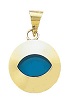
Third Eyes are little lifelogging cameras provided at government expense. They intermittently take pictures + video and record conversations and wirelessly upload them to a central database.
 Oh no! Dystopian society in which the government can monitor everything you do, right?
Not exactly. The central database is encrypted, and only the wearer of a Third Eye knows its master password. This master password can be used to generate daily passwords, which unlock the data for a specific day without allowing reconstruction of the master password. At the request of the wearer and the provision of the daily password, the caretakers of the central database can decrypt a day’s recordings.
This soundly discourages crime. A falsely accused person can authorize decryption of their recordings for the time the crime took place, potentially proving their alibi. And a victim can authorize decryption of their recordings, proving their story to be correct.
“Decryption”, in this context, means that one of the Priests of Truth who runs the central database will watch the recordings and then send back a single bit of information. For example, a judge might send a request to know whether someone committed an assault on a certain day, and the accused might release the password to their Third Eye. The Priest would then watch the recordings, send back a “yes”, “no”, or “it’s complicated” to the question, and then swear an oath never to discuss the recording further without the subject’s consent. So if you didn’t commit a particular crime because you were busy having an affair with your best friend’s wife, your secret is safe.
Average citizens are not required to wear Third Eyes – that would be dystopian – but most people quickly see the benefits. But the Rhavakl, who serve as the police force, are required to wear them. The Priests of Truth, civil servants who might otherwise be subject to bribery, are required to wear them. Anyone in a position of power or vulnerable to corruption charges agrees to put on a Third Eye before being trusted with their office.
None of these people are ever required to disclose their password, of course. That particular rule is sacrosanct. But if you’re wearing a Third Eye, and you refuse to give access to it in a criminal proceeding, no one is the least bit reluctant to take that as an obvious admission of guilt.
The system isn’t perfect. Third Eyes neither record every single moment, nor can they upload their data to the central database in real time. It’s possible to accept a bribe very quickly, hoping you get in between Third Eye recordings. And clever muggers will demand that people hand over their Third Eyes during an assault, then break them so they don’t have a chance to transmit their data (some of the newer models have panic modes, but they don’t work 100% of the time).
But the device operates on a random schedule and never gives any detectable sign that it’s on. So anyone who wants to do something illicit has to hope they get lucky, and a lot of people aren’t willing to take the risk.
And the uncertainty inherent in Third Eyes is a feature, not a bug. It is acknowledged practice to hold trials before anyone knows whether the recordings from Third Eyes address the problem. The confirmation from Third Eyes then provides useful training data for Priests of Truth.
The Priesthood of Truth
The most important evaluations of factual questions are performed by prediction markets: either the Angel of Evidence in the Meta-Analytical Oracle or smaller oracles that address purely local concerns. But sometimes there are questions not worth a market’s time or energy, specific questions about individuals that need to be made dozens or hundreds of times per day. For these questions there are Priests of Truth.
Priests of Truth are humans who have been trained to have judgment approaching that of a prediction market. To be accepted into the Priesthood, you must cultivate near-perfect calibration and accuracy compared to both other humans and predictive algorithms. Some tests face the candidate off against a prediction market they are not allowed to view. Others make them evaluate training data – cases from years ago in which the right answer is already known.
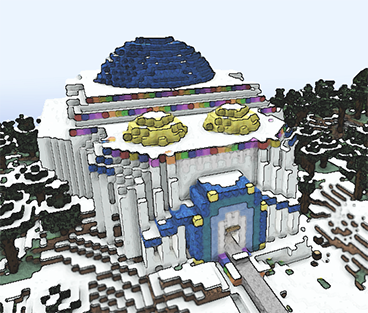 An Arch-Cathedral in Tala – because I already used up all my pictures of more relevant buildings in the last post
Most Priests go on to specialize. Some become judges for criminal trials, skilled in predicting whether a suspect actually committed a crime from the testimony available. Others work on the opposite end of the justice system, skilled at predicting whether offenders have been sufficiently rehabilitated that they will not offend again. Others are the ones who select gametes for the fertility program, skilled at predicting from genetic information and parental histories whether they will produce healthy and happy children. Still others are the ones predicting who should be offered incentives to give birth to and raise these children, based on predicted or observed parenting ability.
Others choose to serve the private sector. There are Priests of Truth who specialize in determining whether marriages will last; for a fee you and your significant other can meet with them and take some psychometric tests and they will tell you the chance you’ll still be together when you’re fifty. There are Priests who will tell you how likely you are to be happy at age 50 depending on what job you choose. There are Priests for nearly anything, and smart people consult them before any big decision.
All predictions by all Priests get entered into – you guessed it – a centralized database – and each Priest receives a score based on how much better or worse ze has done than other predictors – again including other priests, predictive algorithms, prediction markets, and the petitioner themselves. Those Priests who fail to beat chance or very simple toy models are expelled from the Priesthood, although given the rigorous initiation process this rarely happens. Those Priests who can beat chance but do poorly relative to other Priests end up in less important positions or out serving tiny communities in the Cold Waste. The most effective and accurate Priests advise the government on delicate tasks, earn wealth and fame, or become High Priests of entire cities.
But being a Priest of Truth isn’t just about being good at figuring things out. The Priesthood is a genuine religious order dedicated to the worship of Truth, one of the two (occasionally three, rarely four) gods of Raikoth. Their philosophy is that you can’t predict things well without learning not to lie to yourself, and you can’t learn not to lie to yourself while selectively preserving your ability to lie to others. Therefore, all Priests of Truth, upon their initiation, swear never to tell even the slightest lie, or to break even the most trivial oath. This commitment makes them useful as an incorruptible class who can evaluate possible corruption in anyone else.
Not that anyone takes this on trust. The Priests of Truth wear the biggest and most sophisticated Third Eyes on the island.
And although Raikoth abhors the idea of an involuntary death penalty (citizens may choose death in preference to exile or other punishments, but it is never forced upon them) this Priesthood is the sole exception. Any Priest of Truth caught lying, cheating, or breaking an oath is subjected to a shockingly primitive custom that has remained intact for over five thousand years since the pre-Apollonian era: they are thrown into the crater of Ianakve, the sacred volcano.
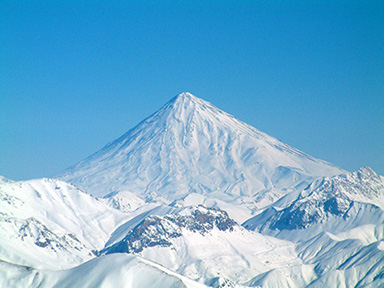 Also a convenient source of geothermal power!