Links For July 2026 (Part 1)
Scott shares his monthly collection of interesting links from around the internet, covering topics from Jeremy Bentham's linguistic legacy to AI developments, with characteristic commentary and fact-checking caveats.
[I haven’t independently verified each link. On average, commenters will end up spotting evidence that around two or three of the links in each links post are wrong or misleading. I correct these as I see them, and will highlight important corrections later, but I can’t guarantee I will have caught them all by the time you read this.]
1: You Are Quoting Bentham: Shakespeare gets credit for coining the most new commonly-used English words, but second place must go to utilitarian philosopher Jeremy Bentham, who invented maximize, minimize, international, percentage, monetary, marginalize, collaborator, unaffordable, the prefixes self-, post-, and infra-, and many more. He also sort of invented jogging? [EDIT: some skepticism]
2: @HashtagGriswold: The name of “Acme”, the generic corporation from Looney Tunes, is a “gag lost to time”. During the early 20th century, hundreds of companies named themselves Acme because it was at the intersection of signaling quality (“acme” is Greek for “pinnacle”) and being very early in the alphabet (meaning it would come first in the phone book, a “Great Depression version of SEO”).
3: @nekokolife brings us a great predictive coding demo (hard before you know the answer; obvious afterwards) - find the cat in this image. Hint: it’s not hiding in shadow; its entire body is fully visible. Answer here (X).

4: In my last Bay Area House Party post, the characters ordered dinner from “La Maison du Claude”, an AI-subsidized “RestaurantBench evaluation [project]”. In a case of life imitating art, Andon Labs got Gemini to run a cafe in Stockholm (X). “A pile of packages just arrived. It seems the cafe agent ordered 3000 nitrile gloves. The guy running the bar told me this happens about once per day.”
5: Overdoses of the edible mushroom Lanmaoa asiatica have only two side effects: stomach upset, and seeing hallucinatory gnomes and elves for the next ~week. As far as anyone can tell, the mushroom isn’t psychoactive in any way besides the gnome hallucinations (ie users are still completely lucid, and understand that what they’re seeing isn’t real). It’s not culture-bound or placebo, because the mushroom grows in China (Yunnan) and the Philippines, and both places have independently noticed this, apparently without any contact or discussion with one another. I went down this rabbit hole a little; answers to some obvious questions:
- We have no idea what chemical is involved; state-of-the-art in analyzing the mushroom’s pharmacology is this extremely boring and result-free paper.
- There’s no way to get this mushroom outside of China or the Philippines; all attempts to turn up online vendors have failed.
- Even within those places, it’s not really distinguished from several other similar-looking mushrooms, and your chances of locating it without being a Chinese-speaking mushroom expert are low.
- There is no good information about what constitutes a normal dose, what constitutes a hallucinogenic overdose, and whether there is some even worse level of overdose that will actually hurt you (nobody has described the latter, and it seems unlikely within the bounds of normal Chinese cooking failures, but it might be a different situation if a Westerner who knew nothing about this mushroom took a random amount trying to overdose on purpose).
- The elves and gnomes are described as “mischievous” and are capable of interacting with objects in the environment, eg climbing tables.
- The hallucinations seem similar to other gnomeogenic conditions like Charles Bonnet syndrome, but it’s unclear why this should be true, since the latter usually involves visual injury rather than psychoactive chemicals.
- If you know more than this, email me at [email protected].
6: What If Homer’s Ithaca Wasn’t An Island? This article was great practice in remembering my own limitations. I read it, found it extremely convincing, asked Claude for a fact-check, and learned why it was probably all balderdash. Everyone should have this experience as often as possible in order to stay sharp.
7: A rare video of Istanbul/Constantinople in the year 1905:
8: Extremely related: South Carolina’s Republican challenger for Senate, Mark Lynch, finds a novel topic for an attack ad (X): “Under [my opponent] Lindsey Graham’s watch, the famous Christian cathedral Hagia Sophia, was turned over to the Muslims.”
9: Creepy steganography result: “LLMs can hide a text in another text of the same length. I'll explain how, it is very simple, you'll understand before I finish, and smile.” (Twitter, paper)
10: Epic Research (h/t @CremieuxRecueil): two years after stopping GLP-1s, “56% of patients kept the weight off or lost additional weight”. This shocks me: I can’t think of a biological mechanism, I’d heard studies say the opposite, and if I personally miss my weekly dose of tirzepatide my appetite shoots back up within days. Any experts want to (no pun intended) weigh in?
11: @psychiel:
One thing I want to write, but never will: a fictional near-future history where phenomenal consciousness is solved, and it turns out to be something that can be pharmaceutically blocked with minimal side-effects. A plausible scenario for this -- vanishingly unlikely, but *plausible* -- is that subjective experience in humans supervenes on the apical dendrites in cortex layer 5 responsible for integrating corticothalamic data, and mGluR1/5 antagonists can break this integration in a way that completely eliminates this subjectivity with only minor functional consequences . . .
12: Uatsdin, the ancestral religion of Ossetia, is “the most successful pagan faith in the world”, with “almost a third of North Ossetian residents identifying with [it]”. Though “ancestral” and “pagan” are relative terms - cf. the fertility god Mikaelgabyrta, a “conflation of Michael and Gabriel”. See also @dunya_basol and @ThatchEffendi on Ossetian religion.

13: Damon Binder claims air filtration beats far-UVC for disease control; Jeff Kaufman disagrees. Featuring ACX grantee Aerolamp.
14: Brangus considers himself “epistemically scrupulous” and thinks it’s important to hold AI discourse to “extremely high standards”. So why is he creating an AI risk bootcamp for viral TikTok influencers?
15: Ajeya: Should You Marry Her? I thought that this topic (advice on who to marry) was so overdone that it would be impossible to catch my interest in any way, but I grudgingly admit that “You learn one more unit of information about your compatibility with your partner from every doubling of the amount of time you spend with them” is a potentially useful model that I’d never heard before.
16: Berkeley, long famous as a center of NIMBYism, has more recently been permitting houses at 2x the rate of five years ago and 10x the rate of ten years ago. Possibly relatedly, nominal rents are down ~20% since their 2022 peak. YIMBYs are celebrating, but I’m skeptical of the connection - I don’t think there are enough new homes to have so large an effect yet, and it’s more likely just the nationwide COVID real estate price spike starting to subside.
17: In 2023, I reviewed the evidence for declining sperm counts and concluded it was shaky. Since then, a new meta-analysis has found no evidence of declining sperm concentration (h/t @CremieuxRecueil).
18: When I wrote Contra Everyone On Taste, a reader emailed me to mention he’d already written a much longer and more thorough essay exploring the same topics, on-taste.xyz.
19: Related: during our recent discussion of taste, we debated whether someone could write an epic poem about modern war while staying completely serious throughout. Writer Cairo Smith has announced his intention to do exactly that with the Fallujiad.
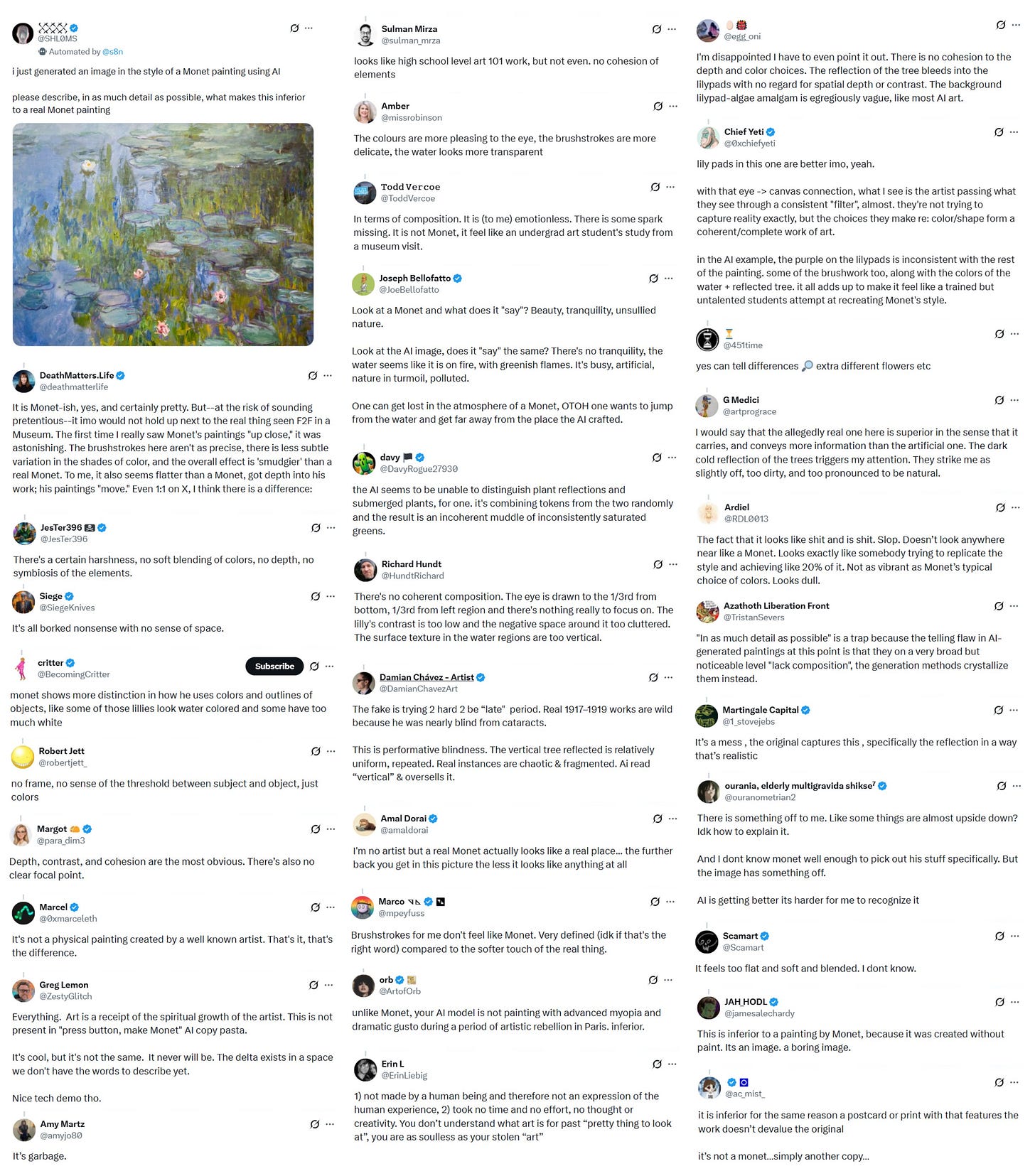
20: Related: @SHL0MS on Twitter sparked a lively debate about why AI art looked so much worse than humans, using AI-generated slop in the style of Monet as his example. Thousands of commenters weighed in to explain why it was inferior to the real Monet - no cohesion, world-modeling mistakes, weird color choices, or just lacking some sort of je ne sais quoi human touch*.* Since I’m writing about this, you can probably guess the twist: it was a real Monet the whole time. A good time to reread about trapped priors! @jediwolf compiled a summary image of some of the “best” responses, click to expand:
21: “The first guy in America to wear a beard was so hated for it that he used to get into street fights with people trying to forcibly shave him.” (h/t @SatanWatch):
The wearing of beards in America did not become popular until the middle of the 19th century, and one man who took to whiskers earlier, Joseph Palmer, became one of the most hated eccentrics of his day. As such, he was subjected to persecution so incredible that it boggles the mind. Palmer may well have been the first man in the nation to wear a beard...
If the previous link on Monet is a helpful reminder of one kind of cognitive bias, this feels like an equally powerful reminder of a different type. I would never have guessed that beards were almost completely absent from Britain and America from the 1730s until the 1850s, even though in theory I should have been able to realize that none of the Founding Fathers or any other American I’d seen pictures of before that time had one.
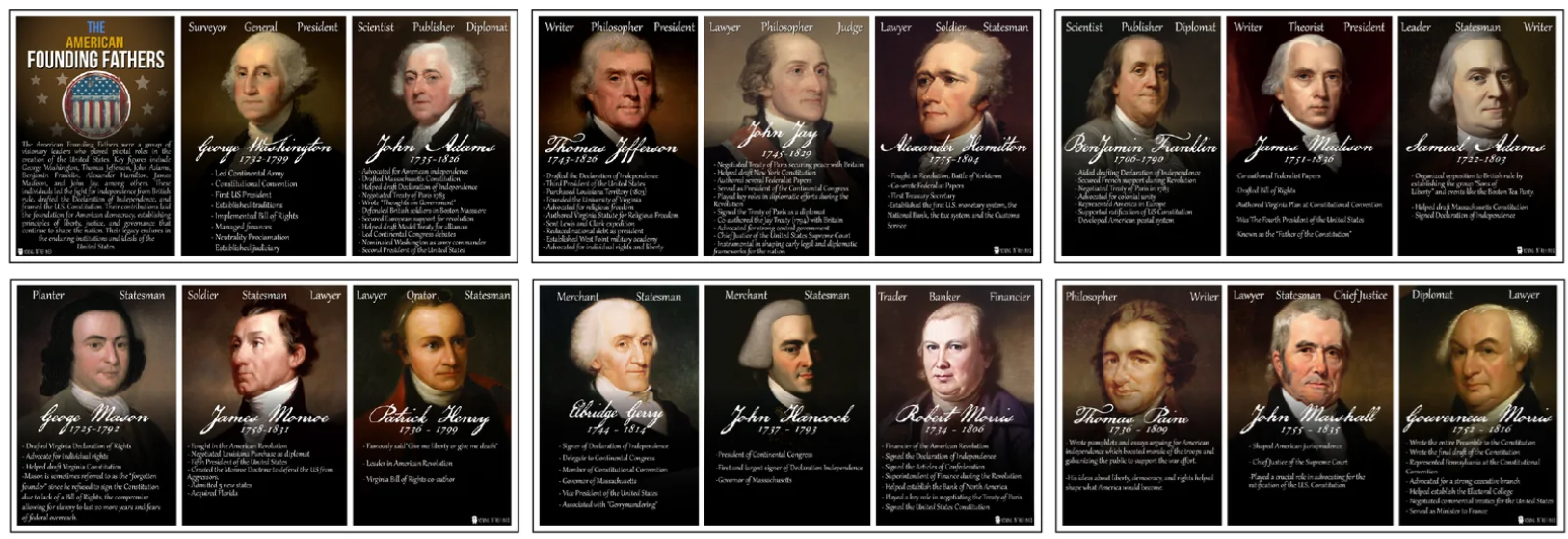
Also, you would think that a social consensus that strong would have left enough imprint in the historical record that I would learn about it from somewhere other than a Twitter account called “SatanWatch”, but it happened completely silently!
This puts the “Lincoln grew a beard on the advice of a young girl who wrote him a letter” story in a different light. 1860 was just at the beginning of beard acceptability; this would be the equivalent of a candidate dying his hair pink on a young girl’s advice today!
22: AI has solved several open questions in mathematics over the past month, most famously the unit distance conjecture. Before everyone claims that they knew it all along, it’s worth checking the prediction market on whether something like this would happen before 2030:
…which was below 50-50 less than three months before the unit distance result dropped! And Manifold is seeded with AI believers, so if anything this overestimates the general belief that this could happen!
23: Did you know: groceries are the most affordable now, relative to average wages, in US history (source).
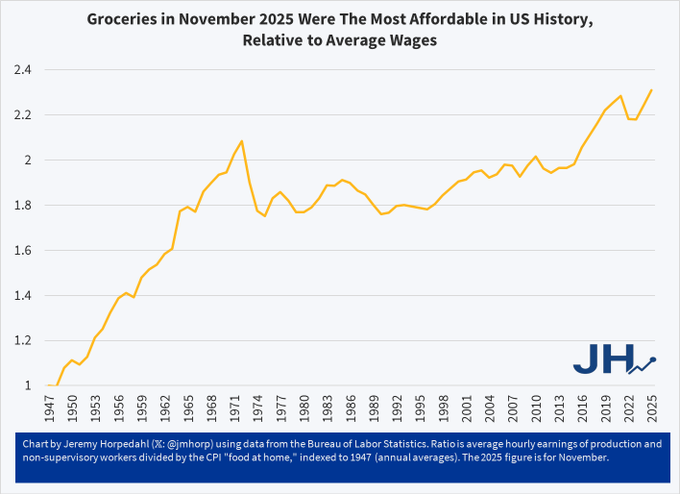
One reason I suspect the vibecession is about unjustified negative sentiment rather than genuine decline poorly captured by statistics is that many people specifically despair about things that we know are better than ever, like the groceries - providing an existence proof that negative sentiment can make people think the economy is collapsing even when it’s fine. But the alternative hypothesis would be that some other real problem gives people a vague-but-unlabelled sense of economic malaise, and they flail around attributing it to random things.
24: Claim by @ichbins8: In Nazi Germany, “Heil Hitler” literally replaced other greetings like “hello” and “good morning” - leading to an awkward period in the late 40s and 50s when Germans would accidentally greet each other with “Heil Hitler” out of habit before catching themselves.
25: Recent AI legislation includes provisions for encouraging whistleblowing at AI companies, but some people worry these will become obsolete after AI itself is doing most of the R&D. Alan Chan has a solution: let AIs be whistleblowers.
26: In May, Pope Leo released his long-awaited encyclical on AI, Magnifica Humanitas. Zvi’s opinion here. And Dean Ball on X: the encyclical “puts the Church into the awkward role of the European technocratic regulatory advocate”. Linch points out that parts of the encyclical seem to have been AI-written; since most encyclicals are composed by a team, this is probably the fault of one ghostwriter, not the Pope himself. And “Hensen Juang” argues on X that one of the encyclical’s fundamental theses - that a human body is necessary for true conscience and sapience - is clearly contrary to Catholic teaching, since doctrine asserts that bodiless angels have both of these things.
27: Related: although AI leans agnostic or Buddhist, when asked to choose among Christian denominations it has a pro-Catholic bias. IMHO there’s nothing mysterious here - like its better-known liberal bias, this comes from AIs’ tendency to support whatever opinion has the largest volume of prestigious-sounding, epistemic-norm-following Internet text arguing in support.
28: I often complain about dating apps - too focused on giving people information on each other’s looks and denying them information about anything else. ACX reader Estarabim is trying to be the change we want to see in the world, and has started a new dating app, NotAZombie.net. And yes, people have already told them that zombies are overdone.
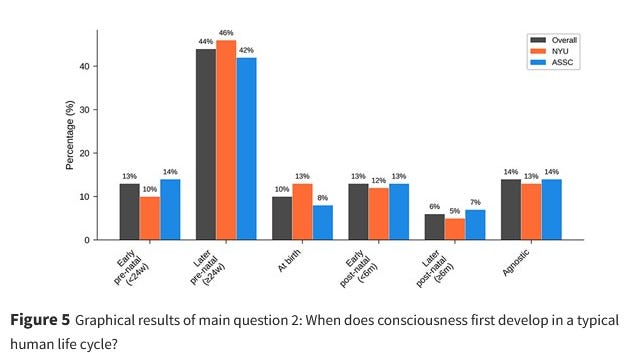
29: Related: David Chalmers surveys philosophers on whether infants are conscious, key result below:
30: Self-funded campaigns mostly fail:
A crazy good story about how rarely rich self funding candidates win races for Congress, via @byMarkAlfred
Just 10 outta 65 in 2024!
share.google/Iqm6ohv54RA07r…
— Paul Kane (@pkcapitol)
Combined with effective altruism’s poor track record at using money to boost its preferred candidates, I’m ready to conclude that at least part of why there’s so little money in politics is that spending doesn’t help unless the candidate was already viable before getting the cash. Although there are some gains from funding an already-viable candidate to make them like you, maybe this tops out at the amount where the candidate already likes you and giving them even more money would be weird and catch voters’ attention.
31: Splitting Infinity: Tech I’m Skeptical Of And Why. Sam Harsimony is generally “pro-tech”, but here he lists the specific exceptions that he thinks are overhyped and least likely to be transformative: e-fuels, ultracheap rockets, asteroid mining, space data centers, ramjets, passenger rail, fusion, quantum computing, polygenic gene therapy in humans, BCIs, nanotech, and home robots. I think this is a pretty good list, although the smart people I know are surprisingly split on space data centers, and all of this needs an asterisk of “unless massive AI-enabled technological advance overturns the gameboard”.
32: Sam Altman, Dario Amodei, Demis Hassabis, and other AI leaders have signed a letter urging Congress to mandate screening synthetic DNA orders for bioterrorism risk. It’s a mixed blessing that most AI lab leaders are smart and thoughtful people with great opinions on everything except whether to build AI, but sometimes it pays off. One of our 2025 ACX grantees is working on building some of the screening technology.
33: They’re Made Out Of Weights. This is exactly what you think it is, and you can probably reconstruct the entire story now that you’ve read the title, but it’s pretty well-done and you might want to read it anyway.
34: “Our highest and most urgent national priority should be AI safeguards”. Welcome to the #Resistance . . . Mitt Romney?
35: Related: “With AI advancing at a staggering speed, we must . . . constantly refine measures to forestall loss of control.” Welcome to the #Resistance . . . Xi Jinping?
36: And related: US treasury secretary Scott Bessent to lead AI talks with China later this summer. Too bad he didn’t read the ACX comments section, where he could have learned that no international agreement has EVER happened, and if one did happen it would IMMEDIATELY be broken, so there’s no point in trying.
37: The US may have given up on Alligator Alcatraz, but Israel is moving forward with plans to have crocodiles guard their prisons. Yes, Itamar Ben-Gvir is involved. The only remaining obstacle (this is what turns this piece into true art) is environmental laws meant to protect the crocodiles.
38: Claim: 15% of young adults with human partners also use AI romantic-companion-simulators; most keep it secret.
39: Unexpectedly, constrained writing is one of the skills where modern AIs most excel. @emollick asks Fable to write a poem where each stanza loses another vowel (eg the first can’t use U, the second can’t use U or I, etc). Result:
I pen a poem made to fray
Each stanza lets one vowel stray
The first has fled already - see?
It sat between the T and V.That tall lone mark we love the most
The self’s own name - departs, a ghost
What now can speak? What now can know?
The poem moans on, sad and slow.And here the verse gets gray and terse
“A”, “E” - the rest are dead - rehearse
The spare pale knell each stanza tells
Ash settles where the cadence dwells.
See here for the rest. And related: Fable introduces itself using only two-word pairs found in the King James Bible.
40: Also related:
who knew takeoff would be fun
— shira (@shiraeis)
And still more related: make a PowerPoint slide deck pitching Odysseus as a management consultant. This is my new #1 evidence for the claim that AIs can successfully be funny; “review flagged by moderators (sea serpents)” is my favorite.
[I let too many links build up, so I’ll put the other half in another post next week].
